
(For English and japanese please scroll down)
Au Japon, le concept de « mitate » — une forme d’art qui « laisse libre cours à l’imagination du spectateur plutôt que de tout expliquer » — est profondément enraciné. La pratique consistant à percevoir, dans les irrégularités ou les fissures d’une céramique, l’évocation de paysages — une tradition née à la fin de l’époque Muromachi, peu avant l’époque Momoyama, durant la période de formation du « wabi-cha » — invite à découvrir de petites scènes au sein même d’objets du quotidien.
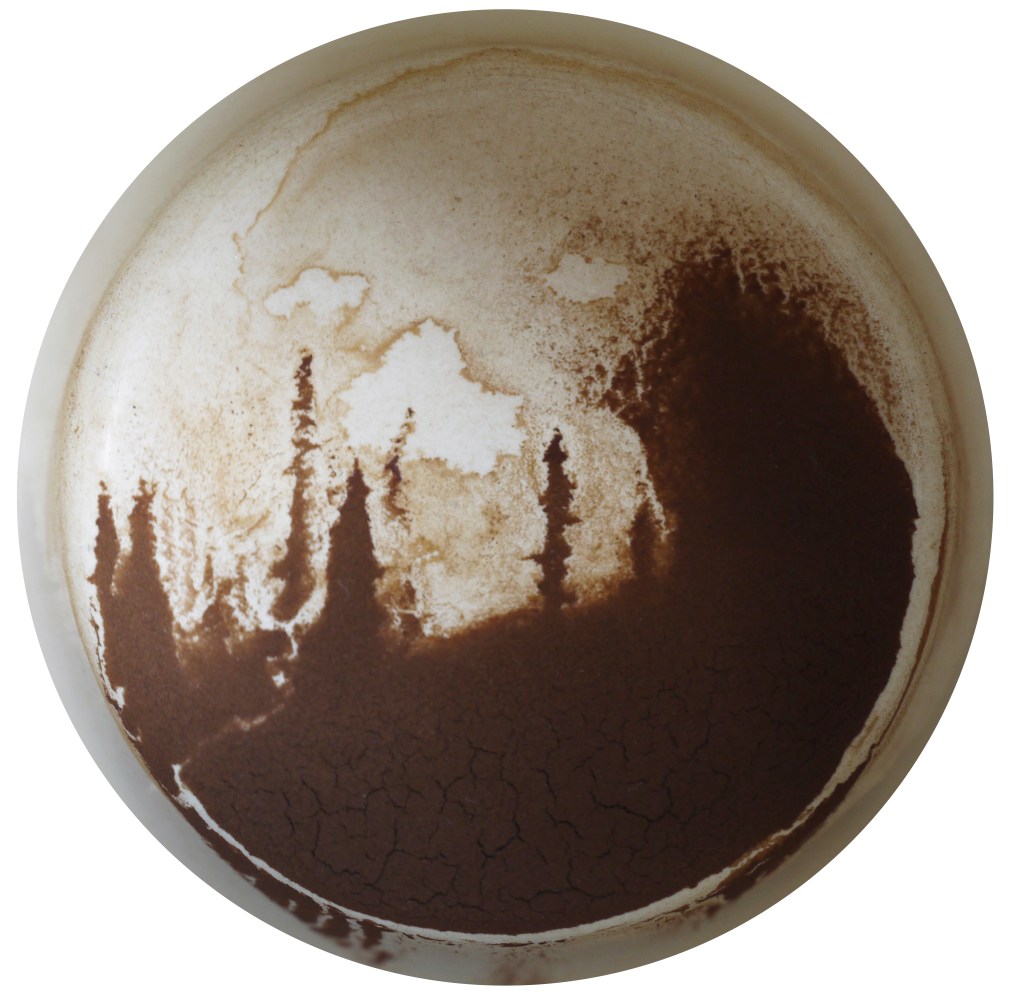
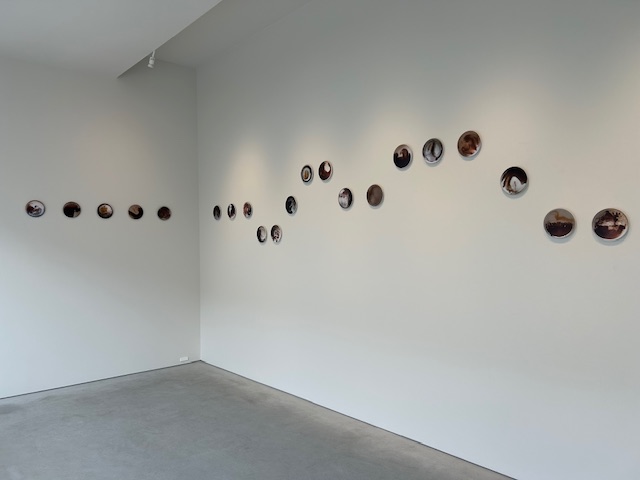
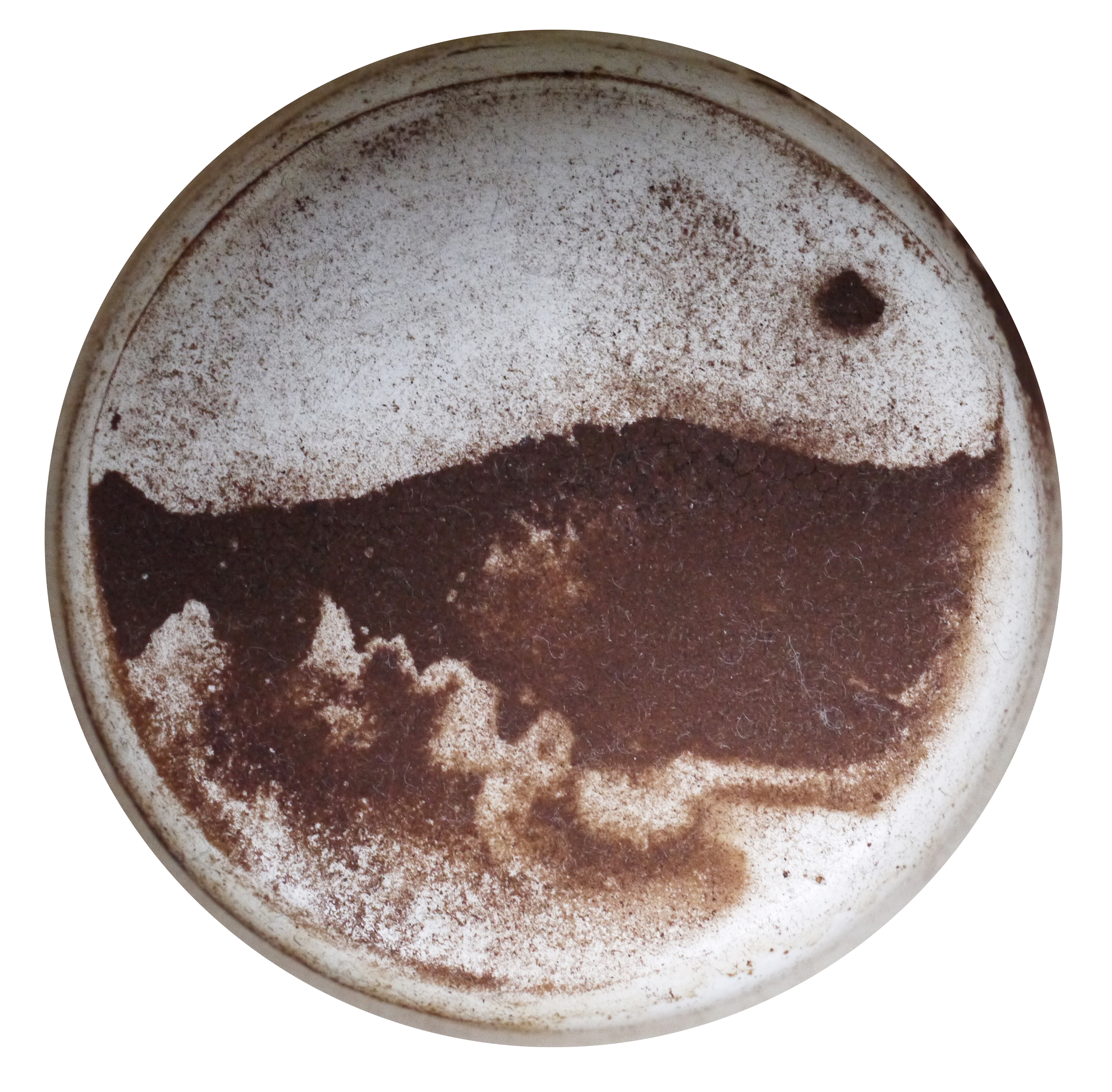
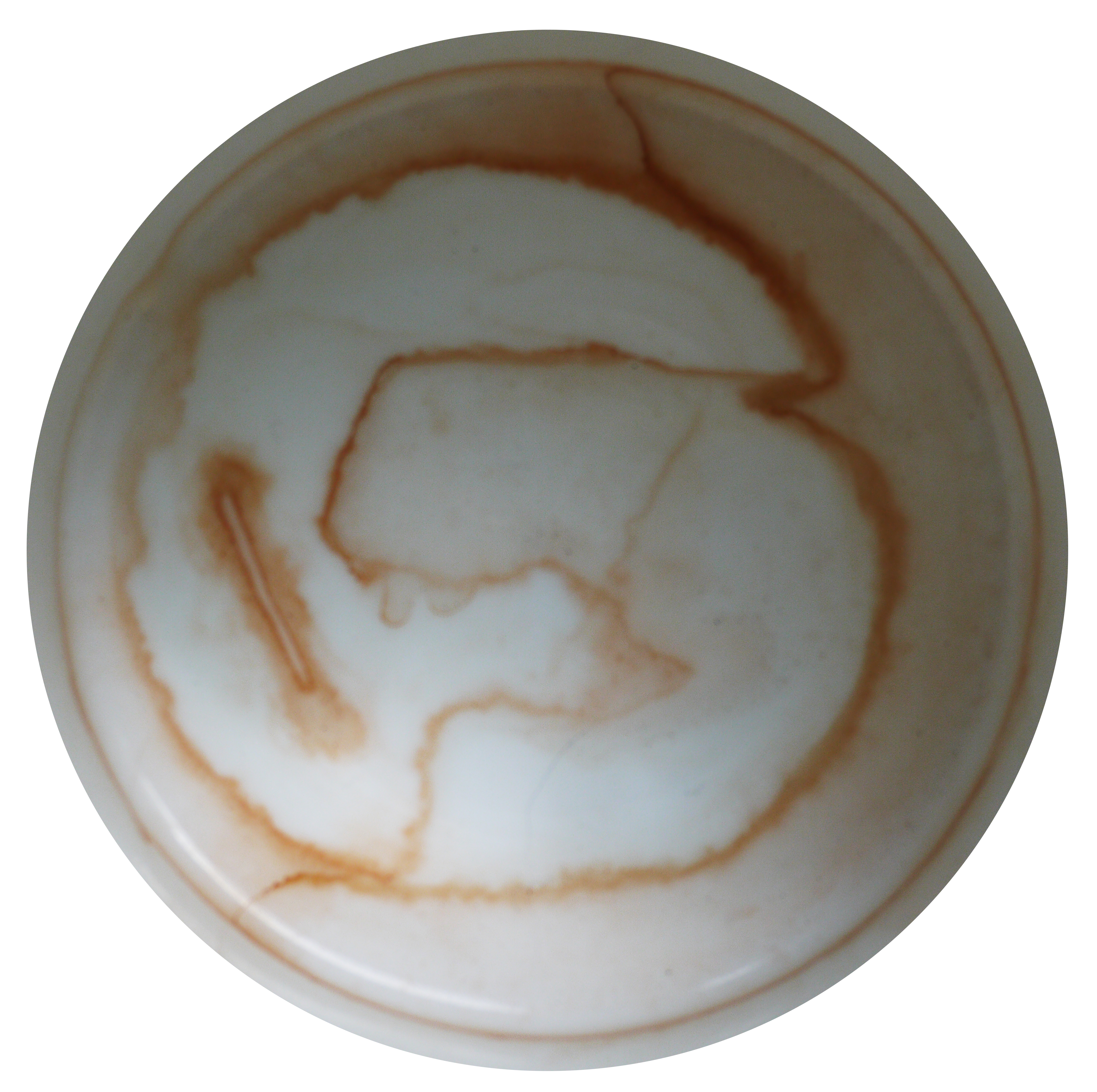
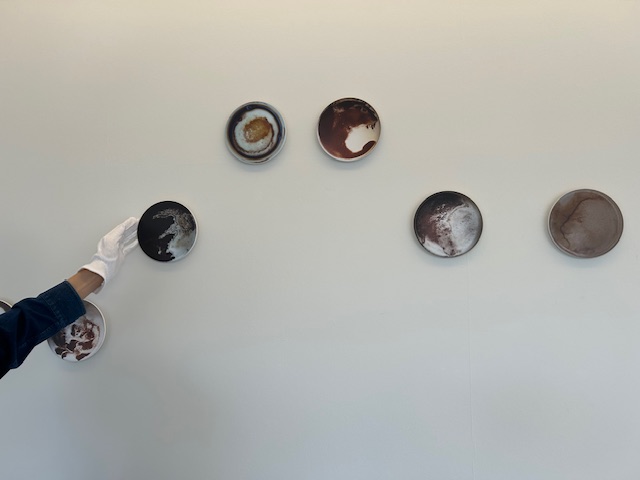
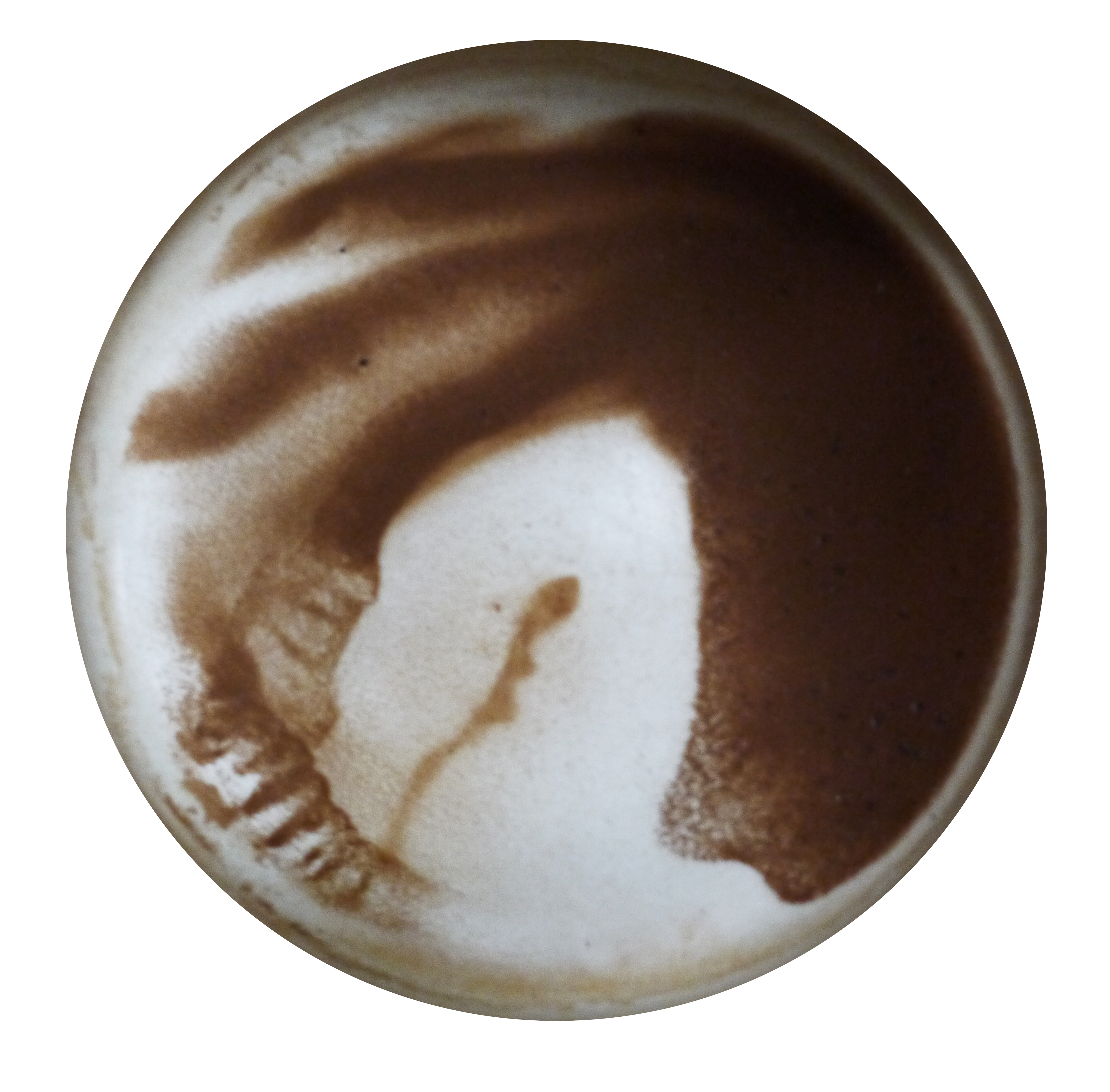
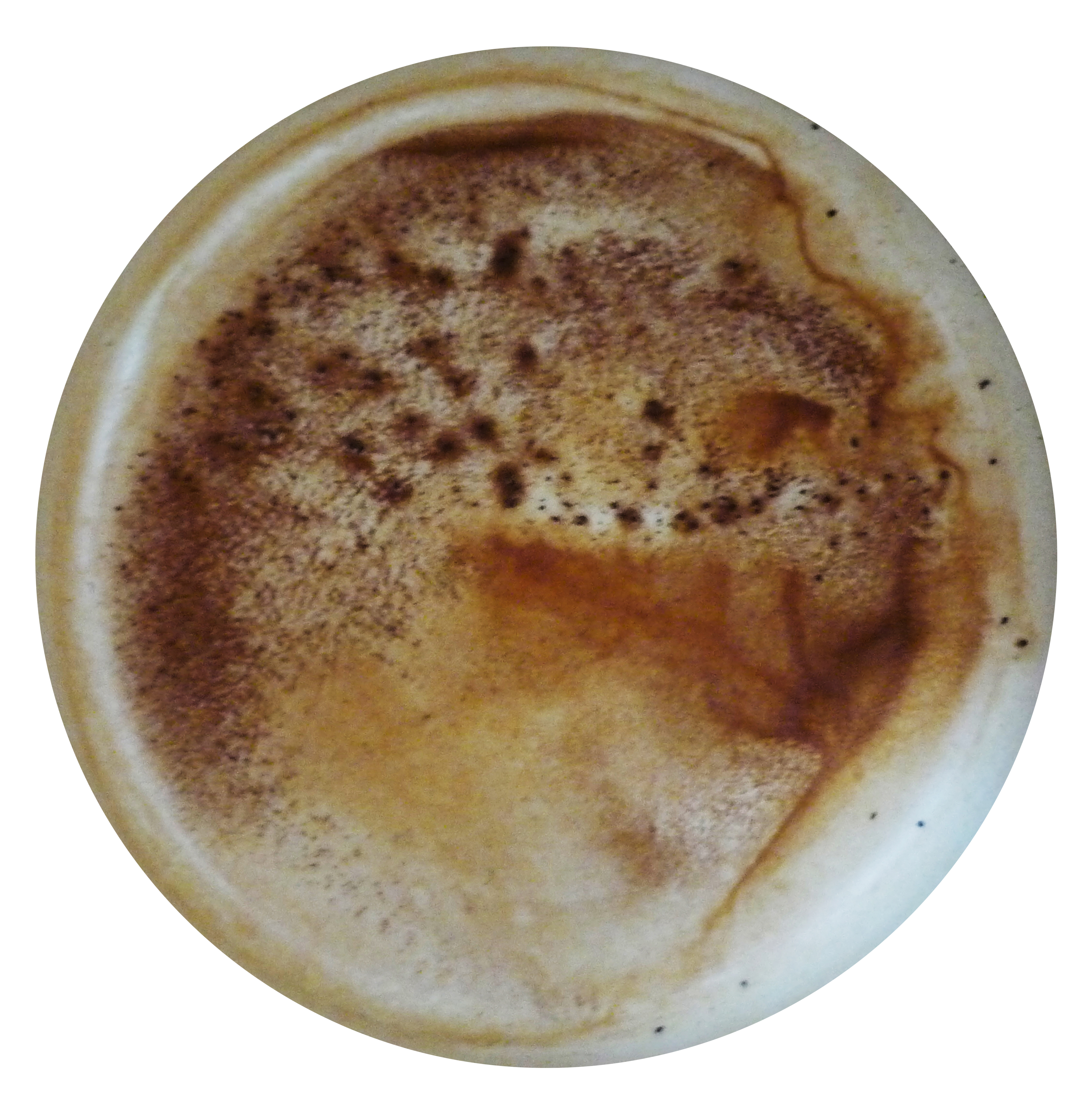
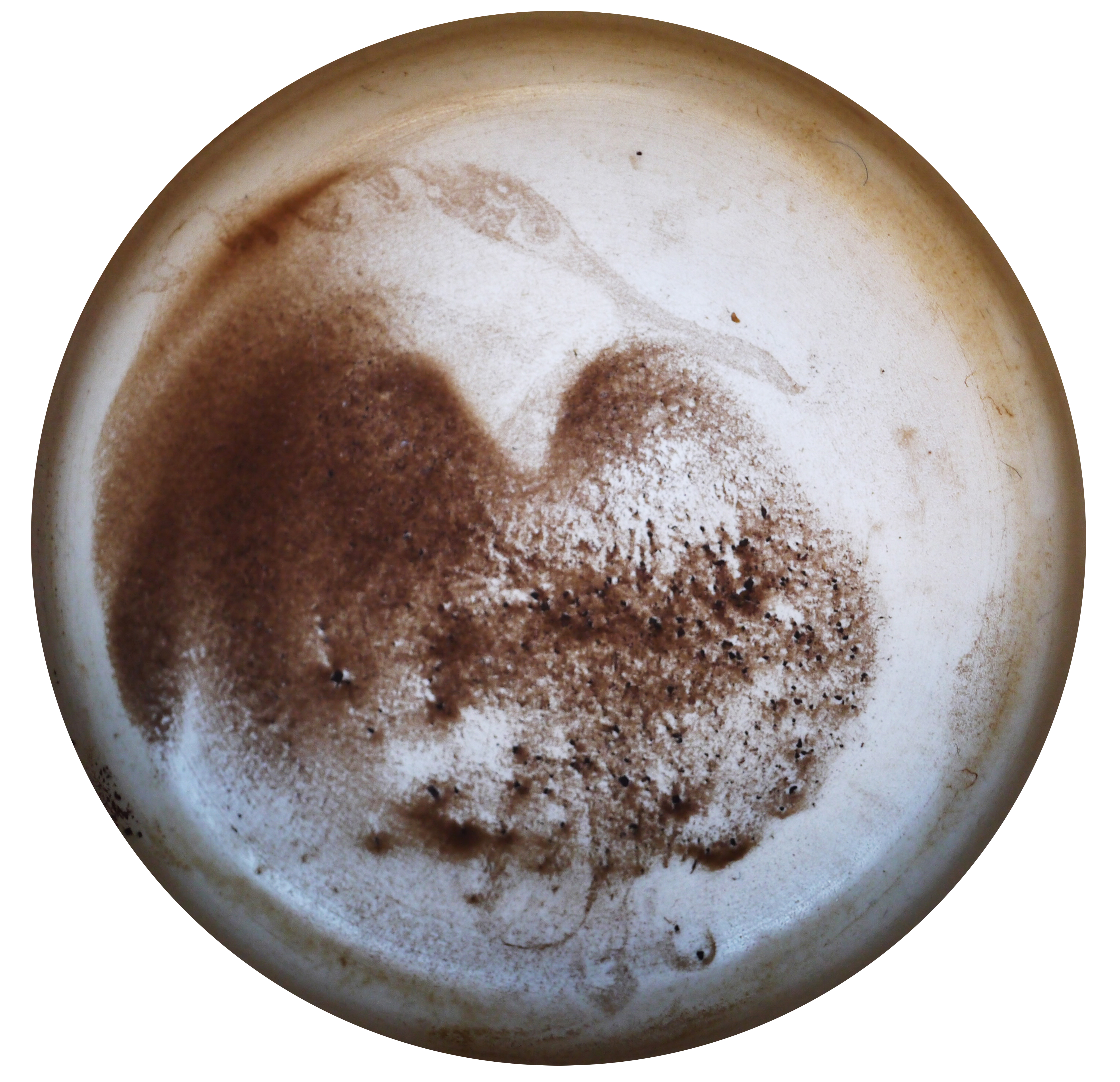
Bien qu’elle évolue dans un contexte temporel et géographique différent, Berta Sesé a été particulièrement séduite par cette culture du « wabi » (et du « sabi »), dont l’influence imprègne nombre de ses créations. Les œuvres présentées dans cette exposition consistent en des photographies de traces de café laissées au fond de tasses, imprimées sur des supports circulaires que le spectateur est invité à faire pivoter manuellement.
Sa démarche artistique privilégie les processus mentaux — tels que la perception, le jugement et le choix — plutôt que les résultats d’actions purement physiques, comme le façonnage de la céramique ou la peinture. Par ailleurs, cette exposition s’inscrit dans une approche qu’elle cultive depuis longtemps : celle qui consiste à inviter le spectateur à aller au-delà des intentions initiales de l’artiste.
Nous espérons que vous prendrez plaisir à découvrir ces œuvres, empreintes de cette sensibilité esthétique japonaise et de cet esprit ludique auxquels Berta Sesé est si profondément sensible.
(TakumaYoshikura, Gallery IND.)
« Pendant 13 ans, Berta Sesé a observé et répertorié le marc de café laissé au fond des tasses utilisées — presque quotidiennement — par un seul individu : un architecte. Deux tasses identiques, qui ont accompagné le rythme de vie professionnelle de cet homme pendant une vingtaine d’années, ont servi de support pour matérialiser ses émotions.
Plusieurs facteurs ont contribué à ces résultats, fruits du hasard : la forme des tasses a joué un rôle, tout comme l’usage d’une cafetière à piston, l’origine du café, le temps d’infusion et les habitudes de consommation.
Cette série a conduit l’artiste à explorer le lien entre le subconscient et son expression, ainsi que la relation entre les anciennes techniques de divination et l’interprétation. Désireuse de partager ses découvertes, elle invite le spectateur à prendre part à l’expérience ; dans cette optique, elle a conçu les œuvres de manière à ce qu’elles puissent être tournées, laissant ainsi l’acte de perception entièrement entre les mains de celui qui les regarde. »
In Japan, the concept of ‘mitate’—art that ‘leaves things open to the viewer’s imagination rather than explaining everything’—is deeply rooted. The culture of appreciating specific irregularities or cracks in pottery as representations of specific landscapes began in the late Muromachi period, shortly before the Momoyama period, during the formative years of ‘wabi-cha’, and involved discovering small scenes within everyday tableware.
Although she lives in a different era and place, Berta Sesé has been particularly captivated by this culture of ‘wabi’ (and ‘sabi’) has produced numerous works influenced by it. The works on display in this exhibition consist of photographs of coffee stains left on the bottoms of coffee cups, printed out onto disc-shaped supports; viewers can enjoy rotating them by hand.
Her creative approach can be described as one that places greater emphasis on the results of mental processes—such as perception, judgement and choice—rather than on the outcomes of physical actions like pottery-making or painting. Furthermore, this exhibition continues her long-standing approach of seeking to invite viewers beyond the artist’s own intentions.
We hope you will enjoy these works, which are imbued with the Japanese aesthetic sensibility and sense of playfulness with which Berta Sesé so deeply resonates.
(TakumaYoshikura, Gallery IND.)
« For 13 years, Berta Sesé has observed and cataloged the coffee grounds left at the bottom of cups used—almost daily—by a single subject: an architect. Two identical cups, which shared in the consumer’s professional rhythm of life for some twenty years, served as the medium for creating impressions of his emotions.
Specific factors contributed to these chance-driven results: the cups and their shape played a role, as did the French press, the coffee’s origin, the brewing time, and consumption habits.
The series prompted the artist to explore the connection between the subconscious and its expression, as well as the relationship between ancient divination techniques and interpretation. She is eager to share her discoveries with the viewer, inviting them to participate in the experience; to this end, she has made the artworks rotatable, leaving the act of perception entirely up to the user. «
日本では「すべてを説明せずに、見る側の想像力に委ねて完成させる」アートとして、「見立て」が深く根付いています。一例として、陶器にできた特定のムラやヒビを具体的な風景に見立てて愛でる文化は、桃山時代より少し前の室町時代後期のわび茶の草創期に始まり、現在でも日用の器の中に小さな景色を見出してその文化を継承する人たちがいます。
生きている時代も場所も異なりますが、ベルタ・セセは、その「侘び」の文化に魅了され、影響を受けた作品をこれまでに数多く生み出してきました。今回展示します作品は、コーヒーカップの底に残されたコーヒーのシミ跡を撮影し、円盤状の支持体にプリントアウトしたもので、鑑賞者はそれを手で回転させて楽しむことができるものになります。
作品制作におけるスタンスは、作陶、絵付けといった身体動作の結果を重視するのではなく、認識、判断、選択といった精神作用の結果に重きを置くもので、作者の意図を越えたところへ鑑賞者を誘うことを企図するという点でも従来のスタンスを引き継いでいます。
ベルタ・セセが共感する日本人の美意識や遊び心が詰まった作品表現となっていますので、ぜひお楽しみいただければ幸いです。
作家ステートメント
13年間にわたり、私は、観察対象のある建築家が、ほぼ毎日使用したカップの底に残されたコーヒーの粉を観察し、記録してきた。約20年間にわたり、この建築家の仕事のリズムに寄り添ってきた2つの全く同じカップは、彼の感情の痕跡を捉えるための媒体となった。
こうした偶然に導かれた結果には、特定の要因が寄与していた。カップとその形状はもちろん、フレンチプレス機、コーヒーの産地、抽出時間、そして飲用習慣もまた、重要な役割を果たした。
今回の展覧会は、こうした観察結果のほんの一例に過ぎない。このシリーズを通じて、私は潜在意識とその表現とのつながり、そして古代の占術と解釈との関係を探求するようになった。私自身の発見を鑑賞者と共有し、その体験に参加してもらうことを切望している。そのために、作品を回転可能な仕様にし、知覚の行為を完全に鑑賞者に委ねている。

